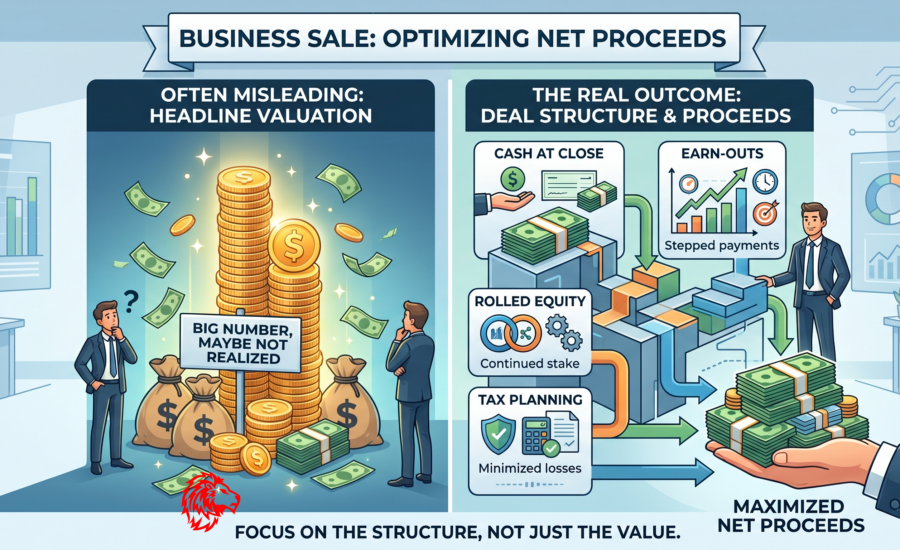
Quick Answers: M&A Deal Structure and Net Proceeds What is deal structure in M&A?Deal structure refers to how a buyer pays for a business, including cash at close, seller financing, earn-outs, rolled equity, and other terms that



Quick Answers: Competitive Tension in M&A What is competitive tension in a business sale?Competitive tension occurs when multiple qualified buyers pursue the same business simultaneously, increasing seller leverage and improving valuation and deal terms. Why is negotiating

Quick Answers: Business Transferability in M&A What makes a business transferable?A transferable business can continue operating successfully without the founder’s daily involvement. Buyers look for stable systems, leadership depth, and operational continuity. Why does owner dependency reduce

Quick Answers: Financial Normalization in M&A What is financial normalization in a business sale?Financial normalization is the process of adjusting your financial statements to reflect the true, ongoing earnings power of the business under new ownership. Why

Management Bench Strength: Why Buyers Pay More for Founder-Independent Businesses Management bench strength is one of the clearest indicators of whether a business is a true “turnkey asset.” Buyers pay more and offer cleaner terms when they

Customer Concentration Risk: Why Your Largest Customer Can Lower Your Valuation Customer concentration risk happens when a large percentage of your revenue depends on one customer. Buyers discount businesses with high concentration because future earnings become less

Valuing Intellectual Property in Service Businesses: Why Systems and Tech Drive Higher Multiples Service businesses can command premium valuation multiples when their expertise is converted into intellectual property (IP): documented methods, standardized delivery systems, and tech-enabled workflows

The law firm market entered 2026 with steady momentum, supported by stable client demand, rising billing rates, and continued competition for legal talent. After a strong close to 2025, many firms began Q1 focused less on whether

The pest control industry entered 2026 with steady demand, supported by recurring residential service needs, expanding seasonal pest activity, and continued interest from buyers seeking route-based service businesses. For Texas operators, warmer weather patterns and population growth

Most business owners look at their bottom line to determine what their company is worth. While earnings before interest, taxes, depreciation, and amortization, commonly known as EBITDA, is a standard starting point, it is rarely the final