Direct answer: Defensible earnings are normalized SDE or EBITDA that reconcile to the company's source records, reflect a realistic post-closing cost structure, and can withstand buyer and lender review. The objective is not to produce the largest




Direct answer: A business does not have to be perfect to be sellable. It needs a transferable source of value, a buyer who can understand and finance the risk, and terms the owner is willing to accept.
Selling a Business for Maximum Value Is a Process Direct answer: Selling a business for maximum value requires a managed process, not simply a listing. The owner must establish defensible earnings, explain the opportunity and its risks,
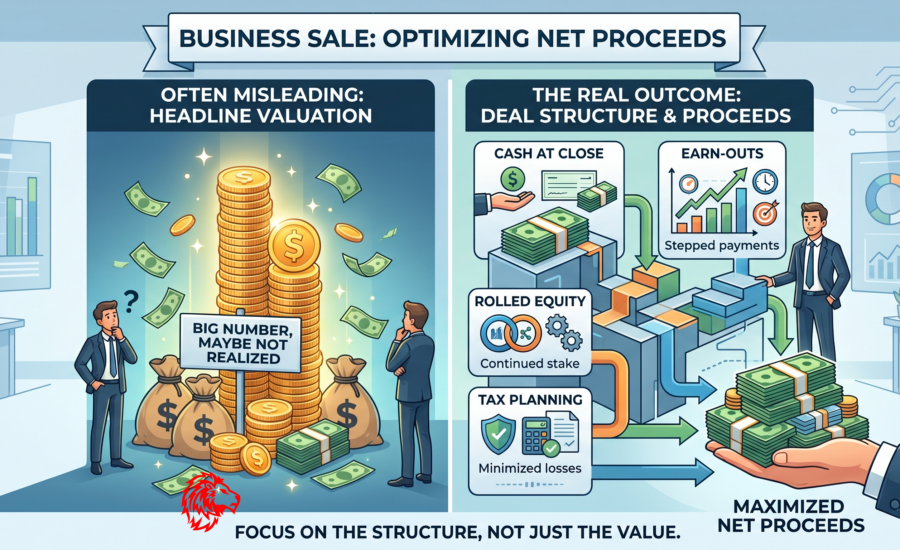
Quick Answers: M&A Deal Structure and Net Proceeds What is deal structure in M&A?Deal structure refers to how a buyer pays for a business, including cash at close, seller financing, earn-outs, rolled equity, and other terms that

Quick Answers: Competitive Tension in M&A What is competitive tension in a business sale?Competitive tension occurs when multiple qualified buyers pursue the same business simultaneously, increasing seller leverage and improving valuation and deal terms. Why is negotiating

Quick Answers: Business Transferability in M&A What makes a business transferable?A transferable business can continue operating successfully without the founder’s daily involvement. Buyers look for stable systems, leadership depth, and operational continuity. Why does owner dependency reduce

Management Bench Strength: Why Buyers Pay More for Founder-Independent Businesses Management bench strength is one of the clearest indicators of whether a business is a true “turnkey asset.” Buyers pay more and offer cleaner terms when they

Customer Concentration Risk: Why Your Largest Customer Can Lower Your Valuation Customer concentration risk happens when a large percentage of your revenue depends on one customer. Buyers discount businesses with high concentration because future earnings become less

Most business owners look at their bottom line to determine what their company is worth. While earnings before interest, taxes, depreciation, and amortization, commonly known as EBITDA, is a standard starting point, it is rarely the final

You’ve spent months preparing, you’ve navigated the exit market, and you finally have a signed Letter of Intent (LOI) at a premium multiple. You feel like celebrating, but for most founders, this is where the real work