Direct answer: Defensible earnings are normalized SDE or EBITDA that reconcile to the company's source records, reflect a realistic post-closing cost structure, and can withstand buyer and lender review. The objective is not to produce the largest




Quick Answers: Business Valuation Before Selling Why should I get a business valuation before selling?A valuation helps establish realistic expectations, identify value drivers, and determine whether your business is likely to attract qualified buyers at your target
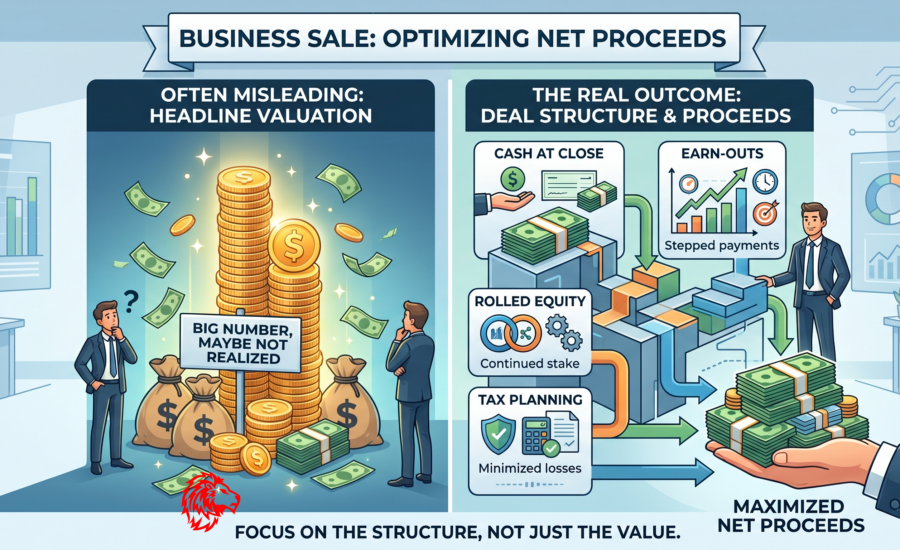
Quick Answers: M&A Deal Structure and Net Proceeds What is deal structure in M&A?Deal structure refers to how a buyer pays for a business, including cash at close, seller financing, earn-outs, rolled equity, and other terms that

Quick Answers: Financial Normalization in M&A What is financial normalization in a business sale?Financial normalization is the process of adjusting your financial statements to reflect the true, ongoing earnings power of the business under new ownership. Why

Management Bench Strength: Why Buyers Pay More for Founder-Independent Businesses Management bench strength is one of the clearest indicators of whether a business is a true “turnkey asset.” Buyers pay more and offer cleaner terms when they

Valuing Intellectual Property in Service Businesses: Why Systems and Tech Drive Higher Multiples Service businesses can command premium valuation multiples when their expertise is converted into intellectual property (IP): documented methods, standardized delivery systems, and tech-enabled workflows

Most business owners look at their bottom line to determine what their company is worth. While earnings before interest, taxes, depreciation, and amortization, commonly known as EBITDA, is a standard starting point, it is rarely the final

The gap between average and premium transactions is widening. Across multiple sectors, we’re seeing two very different outcomes for businesses that, at first glance, appear similar in size and profitability. Some are trading within predictable middle-market ranges.

You’ve decided to sell your fifteen-million-dollar HVAC business. The financials are strong. The business is ready. Now you face the question every seller eventually reaches: Who is the right buyer? Traditional brokers often default to the same

Most owners follow a familiar pattern once they start thinking about selling. They ask a few brokers for valuations, compare the numbers, and assume the truth is somewhere in the middle. It feels straightforward until the spread